|
In Tibetan Buddhism, the lama (from the Tibetan བླ་མ་, teacher or spiritual guide) is an "authority on doctrine," a spiritual teacher, someone capable of showing others the unequivocal path to liberation and enlightenment.
"Lama" is a title for a teacher of the Dharma in Tibetan Buddhism. The Tibetan word "Lama" means "highest principle", and less literally "highest mother" or "highest parent" to show close relationship between teacher and student. “Khyenno” means “please think of me”. With this, we remember the lama again and again, constantly keeping in mind the positive qualities of the lama and praying to him or her.
0 Comments
This video is a precious gem to listen, reflect on and meditate: teachings by Kyabje Dorje Chang Kalu Rinpoche Karma Rangjung Khunkhyab 🙏 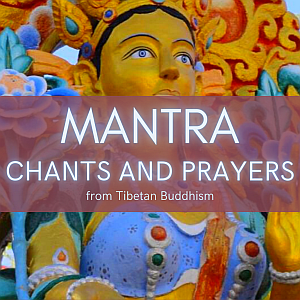 Get inspired by new age music with warm blessed healing sounds.
Concentrate and pacify the mind by reconnecting with your true nature. Relax, expand your mind and open your heart to bring peace to the world. Music to focus and calm down. Start your inner journey! Listen & share here: https://open.spotify.com/playlist/62EYov1T22orJny4xJZyXW?si=b8a004eaa83b4b1cit. "In general, the mantras are in Sanskrit. Sanskrit is considered not a human language, but a divine one. If we think about it, each language comes from the energy of each country (German is impregnated with German energy, Italian with Italian energy, etc). But Sanskrit came from this other energy, a divine, or enlightened energy. So when you recite the mantras, when you make the sounds of the mantra, for example "Om Tare Tuttare Ture Soha", there is a blessing just in those sounds: the Sanskrit alphabet is a mantra.
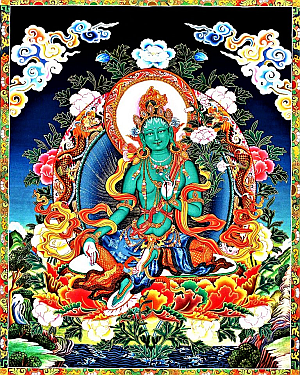 Green Tara "Both women and men have the same spiritual potential and the same capacities for realization.
A long time ago, Tara was a woman who made the promise to attain Buddhahood to benefit beings infinitely. Green Tara and Om Tare Tuttare Ture Soha mantra. The meaning of divinity in Tibetan Buddhism25/2/2023 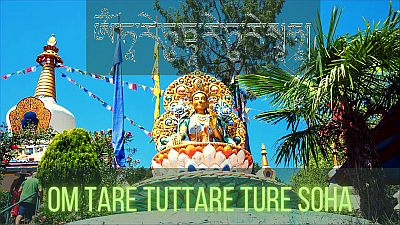 Tara statue at Dag Shang Kagyu buddhist center in Panillo, Spain. Green Tara mantra OM TARE TUTTARE TURE SOHA was the first mantra I learned. The psychotherapist who helped me a few years ago taught me. He recommended reciting him everything I could between the sessions, and since I wanted to be better, I thought: "I have nothing to lose, let's give it a try". I recited it as I traveled by subway, while showering and whenever I could.
"🔸In Tibetan Buddhism, the divinity is not an external, worldly deity, but a divinity that arises within us, it comes from our interior because it is our true nature, the state of Buddha, and therefore establishing a connection with it is of great benefit . By reciting the mantra Om Tare Tuttare Ture Soha we create a connection with Tara, which is our true nature, thus pacifying afflictive emotions and obstacles that we have. Purifying negativities the last day of the Tibetan year with Vajrasattva 100 syllables mantra21/2/2023 Last night, before Losar day (Tibetan new year), music came to my mind while singing 100 syllabes of Dorje Sempa mantra (Vajrasattva mantra) with some rhythm inspired by the sound of the mantra.
I decided to record it before going to bed. I thought: "It seems a good idea to work on this today, so I can purify obscurations singing the Vajrasattva mantra in the last day of the Tibetan year 2149, and start tomorrow the new year 'very clean'". Why not? 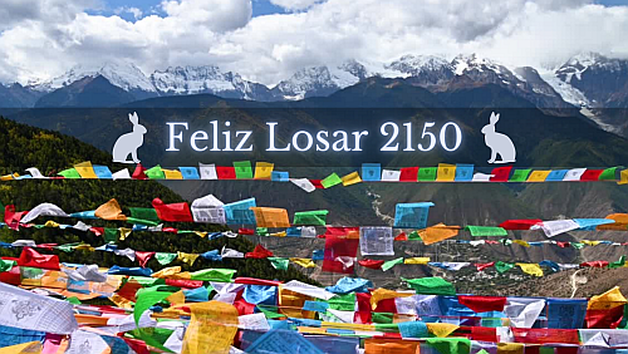 LOSAR Tibetan New Year 2150 ☸ WATER HARE
LOSAR TASHI DELEK "Losar" means: new year; and "Tashi Delek": may all signs in this environment be auspicious. "Losar Tashi Delek" is the usual way in which the new year is congratulated in Tibetan Buddhism. 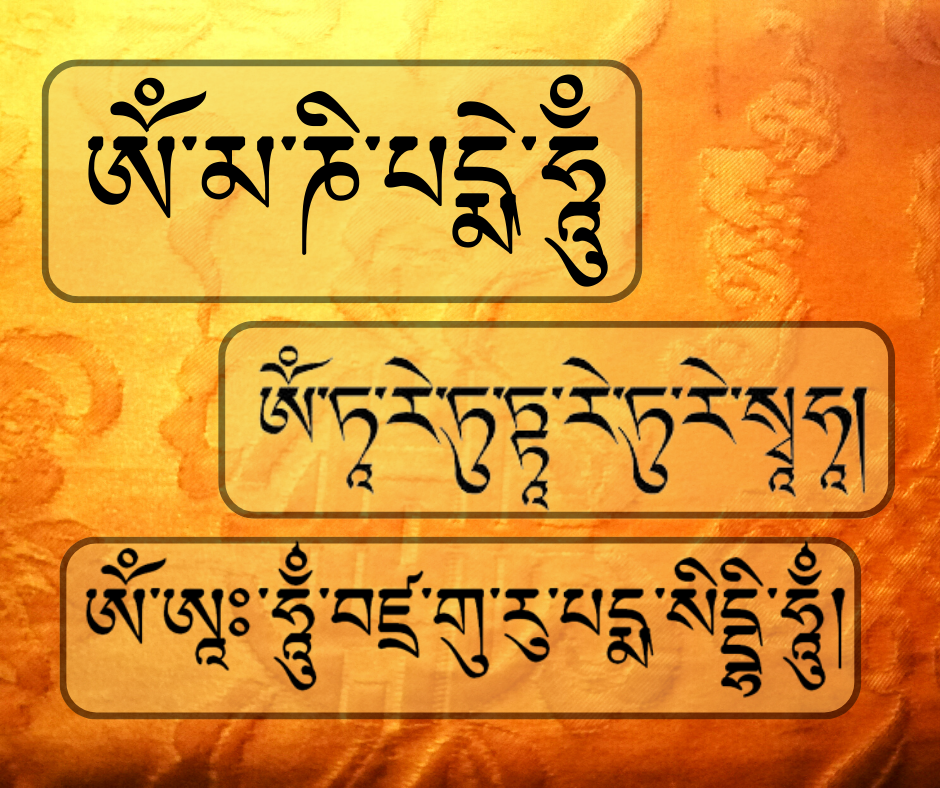 Om Mani Padme Hung, Om Tare Tuttare Ture Soha and Om Ah Hung Bendza Guru Pema Siddhi Hung (Chenrezig, Tara and Guru Rinpoche Mantras) "In Tibet the Buddhist tradition is very old and everyone admits that mantras recitation has beneficial effects. Instead in the West it is not seen that these words can act on the mind. The power of the words Words are sounds with a very large power. In everyday life, words can cause joy or anger, or completely change a person's mood. It is not difficult to verify that this power is exercised in numerous areas. The function of mantras Mantras have the power to purify the minds of faults and veils and make their true nature evident. Its function is therefore very beneficial. Take for example the Chenrezig mantra, the mantra of six syllables OM MANI PADME HUNG. Each of the syllables is attributed powers such as eliminating the six basic disturbing emotions (desire-air, hate-aversion, mental opacity, greed, jealousy and pride). The mantras, intraduible The mantras have been stated by the Buddhas and the Bodhisattvas with the help of words and sounds of the Sanskrit. As sound plays a very important role in mantras, Tibetans never translated them into their language, but transcribed them thanks to a transliteration system that allows you to preserve the Sanskrit sound using the Tibetan alphabet. Thus they preserved the spiritual power inherent in the loudness of the Sanskrit and the original mantra enunciation. Easy and beneficial Even if we are physically occupied by a job or other activities, or do not have time to meditate, we have the possibility of using our word to recite from time to time the mantra OM MANI PADME HUNG, so we will do something of great value and its effects will be very deep, for ourselves and for others." (Kyabje Kalu Rinpoche, Budismo Esotérico, Ediciones Chabsel: https://dskpanillo.org/shop/product/budismo-esoterico-16792?category=958&page=2) Read more 👉 Green Tara and Om Tare Tuttare Ture Soha mantra. The meaning of divinity in Tibetan Buddhism 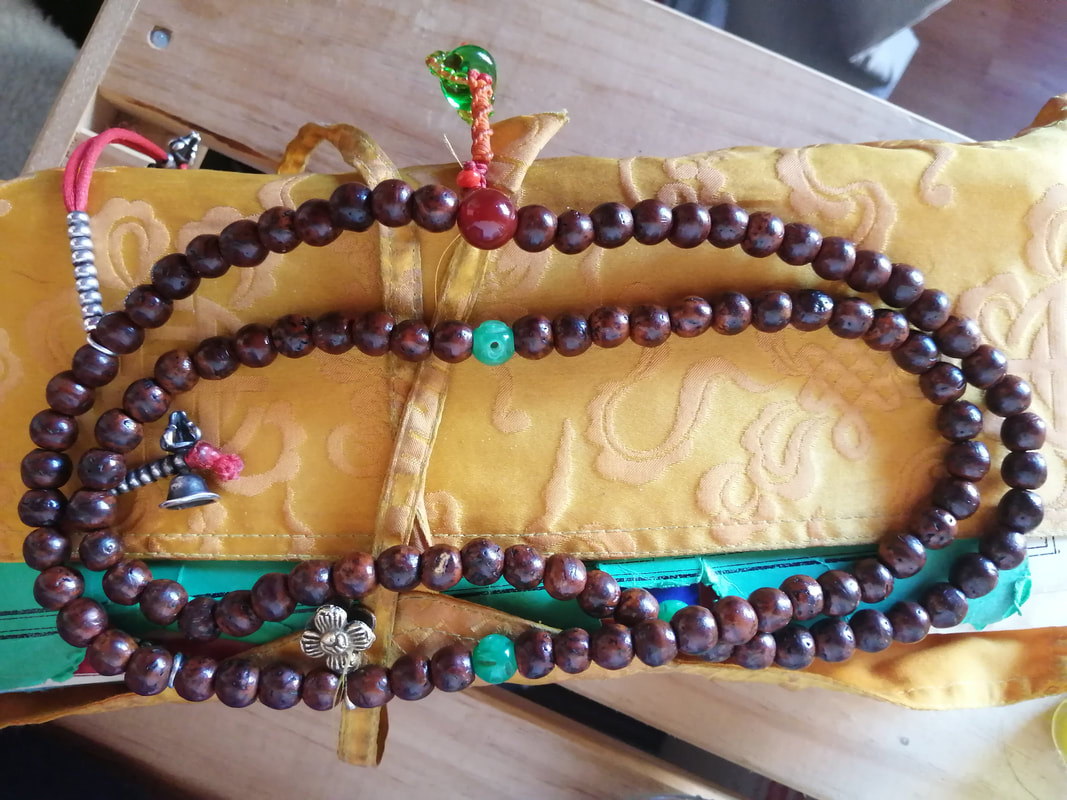 The mala is used to recite mantras. It is held in the left hand and the beads are passed down. The two counters added to it end in a vajra, a symbol of compassion and skillful means, and a bell, a symbol of wisdom and emptiness. |
Dusum SangtongBlog & News Listen on:Escucha en:Escolta a:

Amazon
ArchivesCategories
All
|


 RSS Feed