|
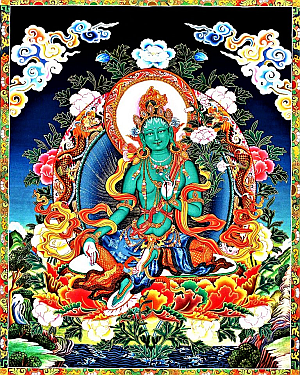
In the Tibetan language, the term Dakini is Khandroma (mkha’-‘gro-ma), which means “she who traverses the sky” or “she who moves through space”; it is also referred to as “sky dancer” or “sky walker.”
Iconographically, their bodies are depicted in sinuous, dancing postures. It is worth noting that although Dakinis are always represented as naked and beautiful, they are not primarily seen as sexual symbols, but rather as symbols of the naked nature of the mind, free from all obscurations. The movements of their dance represent the movements and thoughts of consciousness in the flow of the mind and the Dharmakaya as the spontaneous blossoming of the Buddha Mind, or Rigpa. Inhabitants of the sky, the Dakinis preserve the words of Padmasambhava and deliver them at the opportune moment to whomever is meant to hear them. It is said that on the tenth day after the full moon they are especially present among us.
0 Comments
This Guru Rinpoche short meditation is performed daily at the Dag Shang Kagyu temple after the Chenrezig sadhana pudja practice. Read more about the meditation here. 👉Stream it & follow: Spotify: https://open.spotify.com/artist/10ohOtrECs8f8m9KIfhS45 Apple Music: https://music.apple.com/us/artist/dusum-sangtong/1582195252 Deezer: https://www.deezer.com/es/artist/143012222 Bandcamp: https://dusumsangtong.bandcamp.com/ - 👉Follow me around the web: YouTube: https://www.youtube.com/@dusumsangtong Instagram: https://www.instagram.com/dusumsangtong/ Facebook: https://www.facebook.com/dusumsangtong - Dag Shang Kagyu buddhist center in Panillo, Spain: https://www.dskpanillo.org https://www.facebook.com/profile.php?id=100064342857113 https://instagram.com/templobudistadepanillo Voice and music by Dusum Sangtong (Joan Anton Mateu Jansana) Recorded with Ableton Live, Audio-technica microphone and Focusrite Scarlett 6i6 interface. Padmasambhava (པདྨ་སཾཆྱོ་བ) means “The Lotus-born”. According to tradition, he was miraculously born in a lake on what is now the border of India and Pakistan. He was invited to Tibet by King Trisong Detsen to help establish Buddhism and overcome spiritual obstacles associated with the local religions. He is considered a second Buddha, especially in the Himalayas (Tibet, Bhutan, Nepal), and is credited with concealing termas (hidden teachings) to be revealed in future times at the appropriate moments. An enlightened master, revealer of teachings that transform the mind and dispel obstacles. I've been wanting to experiment with electronic beats in my compositions for a while now. Many ideas come to mind for trying out new rhythms, sounds, and musical arrangements of electronic music combined with Tibetan Buddhist mantras and prayers. When I was recording Namo Buddhaya, Namo Dharmaya, Namo Sanghaya, I was already particularly keen to do this. While listening to it, I could already feel the chill-out vibe. Now, I've finally decided to start a new series within Dusum Sangtong's musical productions to experiment with creating electronic tracks, beginning with three relaxing chill-lounge versions of Namo Buddhaya, Namo Dharmaya, Namo Sanghaya, which I'll be releasing over the next few months. I hope you enjoy them! "Namo" in Sanskrit means "homage" or "I pay homage." Therefore, "Namo Buddhaya, Namo Dharmaya, Namo Sanghaya" is a way of showing respect to the Three Jewels and taking refuge in them. Despite the differences between the various branches of Buddhism, the same three fundamental pillars, known as the Three Jewels, always remain:
When a person wishes to integrate Buddhist philosophy into their life, they say, "I take refuge in the Buddha, I take refuge in the Dharma, I take refuge in the Sangha." This is known as taking refuge. The Dharma, the Buddha's teachings, is based on the Four Noble Truths, symbolized by the wheel. Originally, the Sangha was the monastic community, and later it expanded to include all those who follow the Buddhist path. The first jewel is the Buddha. Taking refuge in the Buddha does not mean hiding behind the security of a powerful being. In this case, taking refuge involves adopting a new perspective, a new awareness of the potential that resides within each of us. By taking refuge in the Buddha, we align ourselves with the capacity to become a Buddha ourselves, to seek the capacity to awaken to what the Buddha experienced. This precious jewel reminds us to find our own Buddha-nature. The Dharma is the path that follows the Buddha's teachings and ultimately leads to awakening. The Dharma teaches us compassion for ourselves and others through understanding the Four Noble Truths and liberates us from fear and ignorance. The path involves embracing the Buddha's teachings and applying that understanding to daily life. The Dharma is called the second jewel. The Sangha is made up of those who gather in groups of any size to study, reflect, and practice meditation with the desire to help and be helped by the group. The Buddha considered interaction with others on the path essential to the practice. He believed this was important for both ordained monks and the wider community. The Sangha is the third precious jewel. In the original teachings and in present-day Theravada communities, the Sangha refers only to monks, nuns, and other ordained teachers. In many Mahayana and Western groups, the concept of Sangha is interpreted more broadly to include all those who embrace the Dharma as a community. The sacred month of Saga Dawa is traditionally held in high regard for the practice of dharma and meritorious deeds. The merit of any good deed performed during this special month is considered to be multiplied a million times.
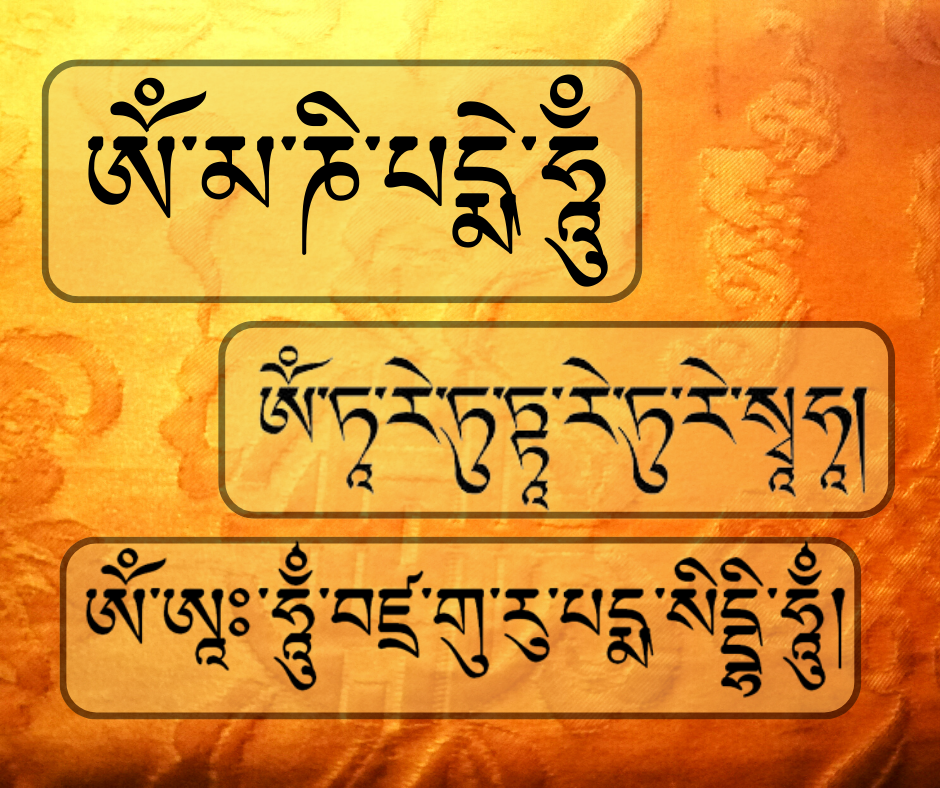
Saga Dawa is one of the four major annual Buddhist festivals. It commemorates three important events in the life of Buddha Shakyamuni: his birth, enlightenment, and Mahaparinirvana, according to Tibetan traditions. Saga Dawa falls on the fourth month of the Tibetan lunar year, and its fifteenth day is considered especially auspicious within this sacred month. The full moon of Taurus, also known as the Wesak Festival or Vesak (from Sanskrit), or Saga Dawa in Tibetan, is one of the most significant celebrations within the Buddhist and spiritual calendar in general. This date, which varies each year according to the lunar calendar, coincides with the full moon of May, when the Sun is in the sign of Taurus and the Moon in Scorpio. What is commemorated during the Wesak Festival? Birth of Buddha It commemorates the birth of Siddhartha Gautama, who later became Buddha. According to tradition, he was born in the Lumbini forest (present-day Nepal) under a full moon. Buddha's Enlightenment It also celebrates the day Siddhartha attained enlightenment under the fig tree (Bodhi), becoming Buddha, the "Awakened One," who achieved complete understanding of the nature of life, suffering, and liberation. Buddha's Death or Parinirvana It commemorates his entry into Parinirvana, the final state of total liberation after his physical death. Spiritual and Symbolic Significance Portal of Light and Blessings According to esoteric and Buddhist traditions, a portal of high-vibrational cosmic energies opens during the full moon of Taurus. The Buddha is said to descend spiritually into the Himalayan valley, showering blessings upon the Earth and all humanity, assisted by Christ (in an ecumenical context). Spiritual Renewal and Service to the World It is an opportunity for group meditation, service, and the invocation of light, love, and goodwill for all humanity. Many spiritual groups conduct meditations to anchor these energies in the collective human consciousness. Union of East and West Wesak is also seen as a time of fusion of Buddhist (wisdom) and Christian (love) energies, seeking to inspire humanity toward a life of greater compassion, cooperation, and peace. Important Wesak Symbols Water Blessed by the Buddha It is believed that during the Wesak ceremony, the waters are charged with spiritual energy and blessed, then shared as a symbol of purification and healing. Global Group Meditation Across the planet, millions of people join in synchronous meditations, generating a collective field of spiritual elevation. In the Tibetan tradition, it is customary to accumulate a large number of recitations of the mantra of immeasurable love and compassion, called the Chenrezig mantra, for the benefit of all beings. This mantra is Om Mani Padme Hung (pronounced Om Mani Peme Hung by Tibetans), also known as the mani mantra. Participate in the global merit accumulation by recording your manis from May 27 to June 25, 2025, at this link: docs.google.com/forms/d/e/1FAIpQLSdKBUKlt9Dp9is78t7o8dH2bD0Gk2kw-yi4u2qA4YAsWLc2vA/viewform?usp=send_form hI have wanted to record the mantra of Sangye Menla, the Medicine Buddha, for a long time, and today is perfect because according to the Tibetan calendar tomorrow is the day of the Medicine Buddha and Tara. Through the recitation of this mantra and the practice of the meditation of Sangye Menla, may all beings be freed from physical and mental illnesses (the root of physical illnesses) and from the fundamental root of all suffering: ignorance.
This is the healing mantra of Sangye Menla, medicine Buddha: Tayata om bekhadze bekhadze maha bekhadze radza samungate soha : 👉 https://music.dusumsangtong.com/medicine_Buddha_Menla_mantra You can recite the mantra for a while visualizing that healing rays of light from the Menla Buddha reach the people you know who are sick or suffering from pain or difficulties and they are free from all suffering. You can also meditate on the Medicine Buddha when you are sick and visualize that the rays of light from the Buddha cleanse and free the affected areas of your body or any illness that you or the beings you visualize have. Siddharta Gautama was a human being who achieved enlightenment (or Awakening, or Buddhahood) through the practice of meditation with the aim of being able to help other beings free themselves from suffering by also reaching that awakened state of mind; from that time on he was known as Shakyamuni Buddha.
Its message of peace, omniscience, motivation and solidarity endures to this day, being the fourth month of the Tibetan lunar calendar, known as 'Saga Dawa' (in Tibetan) or 'Vesak' or 'Wesak' (in Sanskrit), very important in Buddhism: the birth, enlightenment and paranirvana of Shakyamuni Buddha is commemorated, and the result of all the actions we perform is considered to be greatly multiplied. That is why in this period the practice of Chenrezig is especially carried out and the mantra 'Om Ma Ni Pad Me Hung' is accumulated with the intention of accumulating a large amount of virtue for the benefit of all beings. If you want to join in reciting mantras in the great accumulation of Chenrezig Om Mani Padme Hung mantras during these days of Saga Dawa at the Dag Shang Kagyu Buddhist center (Panillo, Spain), this is the link: https://docs.google.com/forms/d/e/1FAIpQLSfIKxphlxb3BUhY6T_PU71YrqvY_2Ydve934ZlIjgd3bbqWcA/viewform As the lamas always remember, it is a short mantra, very easy to remember, only 6 syllables, but very powerful, and very beneficial: Om Ma Ni Pe Me Hung Om Ma Ni Pe Me Hung Om Ma Ni Pe Me Hung... Listen and learn more about Chenrezig mantra here: https://www.dusumsangtong.com/chenrezig-meditation-mantra-om-mani-padme-hung-live.html In Tibetan Buddhism, the lama (from the Tibetan བླ་མ་, teacher or spiritual guide) is an "authority on doctrine," a spiritual teacher, someone capable of showing others the unequivocal path to liberation and enlightenment.
"Lama" is a title for a teacher of the Dharma in Tibetan Buddhism. The Tibetan word "Lama" means "highest principle", and less literally "highest mother" or "highest parent" to show close relationship between teacher and student. “Khyenno” means “please think of me”. With this, we remember the lama again and again, constantly keeping in mind the positive qualities of the lama and praying to him or her. This video is a precious gem to listen, reflect on and meditate: teachings by Kyabje Dorje Chang Kalu Rinpoche Karma Rangjung Khunkhyab 🙏 |
Dusum SangtongBlog & News Listen on:Escucha en:Escolta a:Archives
December 2025
Categories
All
|
RSS Feed